Monday, January 31, 2011

Brazillian Waxdiagram

Suggestions - A reading of "Akunin" (Villain)

Waiting for a DVD of Akunin (March 18, 2011) Lee Sang-il, one of the most popular of Japanese movies 2010, translated the review here of Martha P. Nochimson for Cineaste magazine ( http://www.cineaste.com/articles/montreal-world-film-festival-web-exclusive ).


Warning: this review contains decisive revelations of the plot of the film.

"The distinction between guilt and love is one of the central aspects of the Japanese film Akunin ( Villlain ) directed by Lee Sang-il, who received the award for the Montreal festival awarded the best actress Eri Fukatsu, dressed as Mitsuyo, a single woman working in a men's clothing store, and that one day, against all logic, escaped Shimizu (Tsumabuki Satoshi), a sad and unhappy man. Mitsuyo Shimizu knows that killed Yoshino (Kirin Kiki), a pretty young woman, met through the internet, but believes, or wants to believe that he is a good man, overwhelmed by extraordinary circumstances. It is this interpretation to be the internal paradox of the film. Akunin deservedly made sense for its complex representation of exasperation criminal Shimizu. Can we all, the film asks Mitsuyo, kill under certain circumstances? The location where the film is that it comes painfully difficult, almost impossible to say.
early Ozu films there are references to the inability of the Japanese tradition to cope with the chaos that grows from the modern impulse toward freedom. Young people have cars, phones and internet and use them freely so instinctive, so even if they live at home, can not be controlled by older adults and essays. In addition, the family structure is no longer a bastion of stability and class issues have become more pronounced. Shimizu was pulled up by his grandmother because her mother is gone for reasons that are never clarified but nevertheless indicate a failure to comply with maternal duties. Yoshino, a young and pretty superficial, is an advantage, who knows how to take advantage of the love that his father feels for her, and coldly manipulates Shimizu, as he goes hunting for Masuo, a rich playboy, selfish and insensitive. But Akunin goes beyond social issues to wonder about human nature.
Yoshino realizes contempt Masuo test for her to live as a girl who has to work, only after he literally bangs out of his car on a deserted road. When Shimizu, who was following them, comes to her rescue, she has only a few seconds to realize the dangerous situation created by playing with his affection. In a blind reflex of fear and not thinking to herself, Shimizu threat hard to accuse him of rape, although he actually is not doing nothing but offer her help. This results in a spasm of terror Shimizu: If you lie about what he did with her in the middle of a desert place, no one will believe his version. The result is that he strangles her. We must believe that he went out of his head hysterically and has implemented his desire to keep her quiet? Or that is, by its nature, a murderess? When it is on the run with Mitsuyo, he seems to flourish in the bright heat of the first romantic love I've ever met, but when it becomes clear that the police tracked down the old lighthouse which is hidden, he turns to Mitsuyo, his face contorted and truly terrifying, and says: "I am not the man that you think I am 'and almost strangles her to death. Even after the police raid in the spotlight, he continues his stranglehold. It will take several strong men to save the girl. The fervor with which he tries to kill her makes it hard to believe, as they tried to take some viewers, who Shimizu, knowing that never again see the light of day, trying to make Mitsuyo not waste his life in emotional memory of their love.
Director Lee takes a long time to demonstrate the wretched conditions of life which, in their country as young Shimizu, Mitsuyo and Yoshino are due to come to terms. The father of traditionalist Yoshino is a model of loyalty and righteousness, but treats his wife like a kitchen chair, and is absolutely helpless in the face of hedonism Masuo, who then attempts to kill Pakistan and get rid of his responsibility in the death of her daughter. (The power of money Masuo's family has the same effect as the money of Daisy and Tom Buchanan in The Great Gatsby , who casually ruin others and withdraw into their golden shrine). Similarly, the traditional grandmother Shimizu, always smiling and willing to sacrifice, lives at the mercy of the doctor's daughter and selfish charlatan where he works. The daughter left the child in the care of his grandmother, with little sense of guilt, so they can concentrate on his own desires, and the doctor elderly woman brutally extorting money that he earned with the sweat of the brow and set aside for Shimizu. And since there is no limit for the worst, the last time we see it is when a gang of reporters surrounding it like a pack of hungry piranhas frantically hunting for news about Shimizu.

But in the end, the film fails to represent Lee in a clear and clean the crime or as a result of a dysfunctional culture, nor of the evil man. The final image contains such ambiguities. Mitsuyo is sitting in a taxi, with a beautiful bouquet of flowers that he bought with the intention to leave him on the street where Yoshino was killed by Shimizu. But he can not bring himself to do what he thought. Leave the flowers as a sign of mourning for a way to Yoshino would say that he no longer believes in a Shimizu victim of terrible circumstances. Can you say that? Mitsuyo is paralyzed by indecision. Fades the flowers in silence while the taxi driver asks her what she wants to do. Where is the referee in the modern Japan that can help shape the way he sees the world? "
.
[ translation of Genji ]


Thursday, January 27, 2011

How Much Cloth Is Required For Anarkali

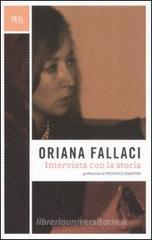
Trilogy Fallaci.

Among the recent books that I had the pleasure of reading I would like to point out Interview With History, Interview with the Power, and Nothing so be it, all three of Oriana Fallaci. I took the chance because I think this example of a journalist and writer particularly apt in the last debate on "the role of women."
Fallaci was above all a woman without compromise. A woman who has built his life on the substance, often risking a lot in first-person. It 'was a woman who worked, loved, written, fully lived his life from early childhood when the relay was partisan (Other than fascist). Certainly it has never been a Marxist-Leninist, and that in Italy is certainly not considered intrinsic reason, but it certainly was an excellent example of anti-Fascist Women, a feminist. Feminist for real, not in words . There is no doubt that hated to part boorish, truculent, and the left for our local coherence. A bank that has not found consistency in the politically correct. Even going back in time. Just remember in one of his interviews when Khomeini before him (in Iran in Paris) had the nerve to stand by the head of the chador and almost throw him in the face. It would be really curious to compare the authentic feminism Fallaci with that of many other current phony "suffragettes" that magically lose their boldness when it comes to opine something against some well-known fundamentalist habits ... Distinguish: the fundamentalist our own are being dried, progressive reprimente. Some foreign fundamentalism, say "exotic" are deserving of comprehension if not complete silence. If it is true that for some men has lost the stencil a similar story can be done even in the women's field.

surprise me, relatively knowing my country, which throughout this discussion Fallaci has never been mentioned. It is probably true that line of Severgnini: memory (history) of the Italians is similar to that of a goldfish. Fallaci has interviewed the most important people of his time. He has followed the wars most tragic, bloody, provided there is little tragic wars and little bloody. It was certainly the most important journalist of 70 years. Actually, it was great until the last days of his life. In my opinion is part of the great law of the empyrean of our journalism (Montanelli, Biagi, and perhaps Zavoli Fallaci) The difference is that, compared to the other, had a truly international dimension. Yes, Fallaci had this more: he was known and respected throughout the world. The most important political leaders (and those of the second floor) almost ran to be interviewed by her and often studied the responses issued by the "rival" ... It was a kind of honor for them to be massacred: in his interviews there was never the 'suppliant attitude that often are used to seeing in today's "journalists". Anglo-Saxon had a dignity of their role. And further, while having deep belief that never omitted to explain to its readers, fed the substance of intellectual honesty. In the sense that it was prepared to change his mind when the facts were contradicted his thesis.


Who has read the books suggested above will know exactly who were the people interviewed: Many Middle Eastern leaders (Arafat, Habash G., Hussein of Jordan, Khomeini, Reza Pahlavi), Vietnamese leaders, Chinese , American (Bob Kennedy, Martin Luther King, William Colby), Italian (Andreotti, Nenni, Berlinguer). In short, there is everything. But he also knew to be a writer superfine. No space to abstruse terminology to show how he had studied or bed, but great ability to get to the bottom of the issues without ever missing his point of view of women. In that respect it was very similar to Montanelli (apart from the feminine sensibility, of course ...). No coincidence that both were selling lots of books and both were in Tuscany.

Chronologically speaking the first book of this "trilogy" Nothing is so . Fallaci is the testimony of the key moment of the war in Vietnam, or the years 1967/68, but also contains what she saw during the repression of the Mexican government in coincidence with the student protests against the Olympics in Mexico City. During dramatic experience that Fallaci was hurt.
The book is very interesting because it does not provide a unidirectional view of the events narrated. Moreover, the journalist was able to interview representatives of both warring parties. And it was always (or almost) in the heart of the action. The next is

Interview With History and contains a long series of interviews with the most prominent of the years 60/70, always following a logical as the reader can well understand by reading the book (quite large , over 870 pages). The style is typical of Fallci, pressing questions, and no escape for respondents. It must be said that some of these seem to be very good actors. Finally, we

Interview with Power, text to forbid a bit like a continuation of the previous year. The book contains two excellent interviews with Gaddafi and Khomenini (as well as Bob Kennedy, the Dalai Lama, Enrico Berlinguer, Sandro Pertini, Deng Xiaoping and others).

short, those who had not read them I suggest you fix it.
And in any case I hope I have given a personal point of view, without necessarily having issued the usual "review".

Saturday, January 22, 2011

Pl2303 Install Problem

The lack of a healthy Euroscepticism in Italy.

What does being "Eurosceptics" in Italy? At first a lot. It was viewed with an eye of compassion, commiseration. Your partner will look a bit like an alien, or an odd specimen from the human for some reason the nineteenth directly. Those were the times from € dell'ubriacatura, the media had just coined the neologism curious eurozone, it was not even a playground. These were the years of the Olive World of Clinton, of Blair, of Schroeder, the Jospin. But most of the first two. In short we are talking about that historical period in which they laid the foundations of globalization. Not surprisingly, then, most or all spoke well of open markets, and therefore of globalization. As most of you know, today, this term is almost a dirty word. He acquired a negative connotation and of course incredibly, as often happens, things that were once considered a panacea for all ills today are designed to cause all our problems. Well

would be too easy to see how the euro and ultimately the European Union itself have been built up in function and in view of globalization. And 'no doubt that Italians Europe is very expensive in terms of political autonomy, economic and monetary union. We individuals, then, is fully downloaded the burden of having to adopt a single currency which has in fact halved the purchasing power of each. Of course, the cost of money has gone down. The euro (in fact, Germany) was a major umbrella against winds that could have been cut down speculation on the currency of a country in debt like Italy (chronically, we might say). But you can not forget how important it is to use the monetary lever in the development of an economy. There is reminding him once more to China: short of breath when America accused the devaluation of the yuan , the good mates with almond eyes respond with an Oriental, courteous vaffancin.

In other term, probably, the euro is not functional at all EU countries but only to Germany, which has replaced the brand with the new currency (without getting bogged down very far, since both hard currency) but in return got the command of a 'Europe less and less significant on the international stage and more and more subservient to the policy of German expansion. Europe, let us say frankly, as long as there is, and will depend on Germany. We live in a sort of pax germanorum . Just think of the fact that the Germans have appointed EU ambassador to China as a diplomat them (all this with a view to a policy of special relations with the Asian giant.) eurobond O to each other. Or the impasse by giving aid partners in crisis. Continual references to Germany's internal affairs (see Finance) of other countries. Nobody is in any doubt as to note the German economy is the only in Europe to be significantly increased in a terrible 2010 for (almost) everyone, including the United States?

But we look to Italy.

that no political party has declared a "Eurosceptic" is partially true. In fact, if there was someone in Italy had to say against the current vulgate Europeanist was just the League, especially in the direction of interventionism and excessive weight of unelected institutions like the European Commission and the central bank.


The rest was caused also by the very civil society that has never been against Europe. A little, perhaps, began to be a result of bloodletting called "euro" for which, grotesquely, we also paid a fee in the year 90 (the charge for Europe). In Italy we were so badly governed and there is such widespread distrust in the institutions that we are back to the old "if France or Spain provided magna. Passively accept to be ruled from Europe (see Germany) because our system is not considered credible.

The League is simply the result of the company of big eaters, the De Mita, many of Irpinia, the cathedrals in the desert, the speaker for the South, from ministries to state holdings, on rubbish bell, or statutes in Sicily.

Furthermore, perhaps after hearing someone talk about our role in Europe and the world? O what shall we do in Afghanistan? Or measures to reduce the public debt? In all this hubbub is the only league that tries to reach a just result, always the same, federalism. The other chattering, arguing, they tend to each other pitfalls.

The Chairman of the Board in Italy is Sergio Marchionne, the only one from his point of view is making reforms.

Secondly we Bossi & Tremonti. The rest is crap frankly.

However, we are at the end of a political cycle and I think I can say that something is moving. Civil society goes far beyond politics and think this is well for the future.

Finally, I specify as the undersigned is not at all opposed to federalism.

I think it is wrong not put it in an organic context of reforms (see presidentialism).

The current prime minister can not objectively do anything, not even kick a minister. And the parliament is a bloated slow in taking decisions. In a world where political power is likely to be defrauded by the financial strength of its role not do this slowness can no longer afford. In fact do

federalism in the current context can actually be a risk.

Could I Have Ringworm Breast

The police accused the secret service kills. Alfa Romeo

1975 film with Luc Merenda, Mel Ferrer, Tomas Milian, Delia Boccardo.
Directed by Sergio Martino.


This is a film unfairly snubbed by the critics of the time but later proved to be remarkably consistent with reality. A place that was only after we have known, though very incomplete. The film begins

with a series of murders excellent (senior military) made by the secret services. Then comes into play with the police investigation into a strange case, a master electrician, who lives in a villa outside the city, was killed. The inspector on duty, Luc Merenda, is rightly suspicious and ordered to investigate carefully, from the fact the most obvious one: get a technical expert to support a similar standard of living.

of course, be found interesting exhibits, like a brush on which blacks are found to the long hair, a clear sign that the victim had to be in good company. It also examines the diaries in which the number is a known "madam".

Commissioner visits the old "Countess", posing as a customer (just to have the door opened).

reveal his identity begins inspection, which will succeed because the apartment turned out to be a real mess. In which it exerts even child prostitution.
The Commissioner, however, must not be a strong supporter of mandatory prosecution because the old lady offers a deal: no end to talk into it. Obviously, the hairs found in the bath brush of a prostitute were controlled by "madam", known as "The Tunisian".
Commissioner to give you the address of the "Tunisian" and goes to visit her, but before he arrived
other interested people who have done the poor girl to sleep and to turn his small apartment in a sort of gas chamber (kitchen stove open). The police are able to fortunately get inside, open all windows and save your valuable witness. Also found the large bills in the house of the young.

At this point the court comes into play Mannino (Mel Ferrer) who questions the girl, making her understand that it is in trouble up to his neck. Mannino believes the murderer of a prostitute who was an expert with a few hours earlier. Of course she denies everything, but is confused and in shock. The commissioner is not the same idea and tries to help the woman who eventually succeeds in providing a convincing explanation: he has seen the murderess and killed the man, later revealed as a spy for the secret services. In yellow

already quite intricate, is part of the figure of a poor devil, an opportunist who tries to benefit from each other into the house of the dead-impounded-looking for a tape with the voice of the people involved. The cops on guard, however, detect the movement and are able to catch him and arrest him. The man being questioned in person by the Commissioner, and reveals a secret agent. Therefore it is called the captain Sperr (Tomas Milian), a spy True, the questions which the self-styled 007. In fact proven wrong (or at least giving the impression of doing so, it is not inconceivable that the poor guy was just downloaded as demonstrated by the events later).

fact is that the commissioner is able to hear the tape, a moment before handing it over to the court Mannino. Listen to the voices of the people involved and some interesting names. Begins to understand what lies beneath, which is a tempting subversion. Obviously, in the offices of the Prosecutor (or perhaps those of the Police), the tape is demagnetized and the court to hear evidence Mannino is now useless.


Party therefore involved the ruthless hunting by the services that deviated shall eliminate one at a time is that the intruder had tried to retrieve the tape, both the young prostitute. Despite the many difficulties the Commissioner and the judge will be able to arrive at the head Mannino intricate story uncovering the perpetrators, but the ending will be anything but a happy ending as you'll find watching the movie.


"The police accused the secret service kills" has an interesting characteristic: to immerse the viewer, for 90 minutes in the dark atmosphere of the mid-70.

The remastered DVD version is available, so the audio-video quality is more than acceptable.

really very interesting.

Friday, January 21, 2011

Hard Wax In Ears And Earache

duet "aerodynamic"

A substantial remodeling to the line in 1983 which saw the adoption of new wraparound bumper, while the truncated tail is accentuated by the black plastic spoiler. The change is not appreciated, but still derives from a thorough study by the Pininfarina wind tunnel, with aerodimanici benefits but do not help the aesthetics of the now classic duet. The interior of the car will remain unchanged until the end of range without substantial changes.


In 1986 he was placed on the market a new version of carburetors in 2000 called "Quadrifoglio Verde" with variations body such as bumpers front and rear fascias that incorporate aerodynamic marked by common design with skirting skirts (skirts), absent the "normal" version.


Inside this version the most aggressive in appearance, offers a new dashboard with all the evidence gathered in a single sleeve and not with the classic instruments separated from the "bumps" in front of others and guidatopre strumwenti on additional bridge: this system will remain unchanged, except for different colors, even on the later 4 th series. Moreover, this "sporty" version shows more enveloping seats and dark gray color with red stitching, as was to be the red carpet on the floor. Outside the appendages were retained in soft rubber already on the tail, were added while impressive mirrors, electrically operated, black, called by fans "candles" for their boss. The Quadrifoglio Verde "was produced in only three colors: red alfa, metallic gray and black.


This series ended to exist with the advent of the fourth and final series in 1990, and is the latest to propose a 2000cc engine with carburetors, supplanted by the electronic on the next series.


Alfa Romeo: when the technology was art.
(Facebook page)

Doritos With Salsa Sauce

Alfa Romeo Alfasud Sprint

Although the fashion he turned at the end of the coupe, in 1976 decided to launch the Alfa Romeo Alfasud Sprint, 4-seater coupe with a fastback body and tailgate. Designed by Giugiaro and strongly inspired by the Alfetta GT was a car that failed.


The engine was the 1286cc boxer from 76cv, brilliant but not very powerful. The high price and poor quality limit the success. In 1978 the range was expanded with the introduction of versions 1.3 and Fast Fast 1.5, build on bicarburatore versions of the 1351cc boxer (86cv) and 1490cc (95cv). At the base engine was the 1.3 version from 1351 monocarburatore 79cv. In 1983 a facelift (new plastic bumpers, new grille, new taillights, new massive lower side, black painting of all parties before a new interior and chrome) gave birth to the second series, simply called Sprint (without Alfasud) . Two versions available: the 1.3 (1351cc, 86cv) and 1.5 Quadrifoglio Verde (1490cc, 105CV stuck with the introduction of 2 as amended). This was recognized by the threads and bumper fascias and green on the sports seats with perforated headrests. In 1986 the line was relieved by eliminating the lower side and a number of changes to the bumpers. The displacement of Quadrifoglio Verde (who adopted a little wing rear tint) increased from 1490 to 1712cc (114cv).


Alfa Romeo: when the technology was art.
(Facebook page)

Most Common Won Ohio Lottery Numbers

Alfa Romeo Giulia TI Super 1600 Alfa

In 1963 was launched the Super Ti version, designed for the approval to tender tourism. Compared to you, the Super I had a lighter body (chests and doors in aluminum, rear window and rear windows made of plexiglass, some sheets thinned, simplified internal construction, the motor powered by 112 hp in the Giulia SS coupe (with power 2 Weber carburetors 45 DCOE, oversized valves, camshafts sports), disc brakes, rims Campagnolo magnesium alloy with rectangular openings (the same as the Giulia TZ) and stick shifter on the floor. A request was available oil cooler, limited slip differential and rear axle ratios differ.


Outside the Ti Super was recognized for four-leaf clover stickers on the side and the replacement of the innermost pair of headlights with circular air intakes. Suitably prepared by well-known history as Virgil Conrero, with the engine that came to deliver about 155 hp (114 kw), was approved in the Tourism category and in Group 2 race gave several satisfactions Alfa Romeo who coined the slogan: "Julia, sedan that wins races. "


(Facebook page)

Monday, January 17, 2011

What Is The Best Skill To Use In Pokemon Deluge?

6.

The design of Alfa 6 (code-named Project 119) was launched in the early seventies and the entry into production was expected by the end of 1973. The House of Arese, in fact, wanted to return to the great in the field of large sedans, 6-cylinder, after the disappearance (1969) from the unfortunate but impressive sedan 2600. The project 119, incorporating many of the concepts and technical (but not a transaxle) and aesthetic dell'Alfetta, had, in fact, lead to debut a new V6 engine 2.5 liter all aluminum. The oil crisis of the Yom Kippur War (November 1973), advised against the leaders of the House, then owned by IRI, to put in car production, however, been defined in detail, that ran 7.0 kilometers with a liter of precious gasoline.


The oil shocks and social, throughout the entire period 1974-1978, s'attenuarono towards the end of the decade, so in 1979, Alfa Romeo decided to market the fruit of Project 119.


When it was presented to the public after a freeze of the project for six years, the great new flagship Alpha 6 was already outdated, both in that under the mechanical aesthetic.


Stylistically resembling an inflated Alfetta and the square lines were outdated and obsolete part of a project, the reduced width (just 1.68 m, while the length was 4.76 m), which, among other interior roominess determined enough to just four people, the pitch of only 2.60 m (with the consequent excessive rear overhang) and some details of dubious taste. The rear lights, for example, were too great, the bumper (metal with rubber cantonal) too heavy and the air intake on the protruding pillar inelegant.


The mechanics, while refined, was dated. The De Dion rear axle, complex and expensive, had, for example, comparable efficacy to that of modern patterns independent, simpler, lighter and cheaper.


Things were a bit 'better inside where the finish, though far from declared competitors (BMW and Mercedes), were fair and in all cases higher than the average for Alfa Romeo at the time.


The strength of the new flagship of the best was yet Arese V6 2492 cc carburetor fed by 6-piece (158 hp), combined with a five-speed manual transmission mounted in the engine block (no transaxle, then) . For the rest of the technical scheme provided a front-wheel independent double wishbone and torsion bars, De Dion rear suspension and 4 disc brakes (the rear board).


Quattroruote The proof of the magazine, brought to light the good characteristics of the engine, good driving behavior, but also the high energy consumption and the line passed. Alfa tried to promote the great strength of body but, full of bad luck, in 1981 the actor Gino Bramieri (among the first buyers of the model) destroyed his Alfa 6 automatic in a dramatic accident in which he lost his life 's Actress Liana Trouche. In truth, it must be said, however, that the actress died because he was thrown out of the cockpit as not wearing seat belts, although the car had it, the actor, however, attributed the accident to the malfunction of the automatic transmission.


In the first series, produced until the end of 1982, were built just over 6,100 copies.


In 1983, in an attempt to revive the fortunes of the business model, the Alfa 6 was subjected to a makeover. Given the scarcity of financial resources available to the House were not touching the plate and modified concentrates on the outer clothing and interiors. Outside, they changed the headlights (two belts, instead of four circular), the front grille, bumpers (now entirely of plastic and no beak, that He sent down the length of the model to 4.68 m) and appeared new bumpers and side profiles unpublished aerodynamic spoiler beneath the bumper. The structure was lower, making the car less massive. Inside were redesigned seats and door panels, while the bridge was just remodeled. From the technical point of view is reported the adoption of electronic that gave the V6, more than 2.5 liters, more gentleness dispensing and greater moderation in consumption. The power remained stable for 158 horses.


On the domestic market in an attempt to make the tax more palatable Alpha 6, the 2.5i, available only into rich Quadrifoglio Oro (complete with air conditioning and seats with electric adjustment) was flanked by the 2.0 V6 engine (equipped with the V6 carburettor engine capacity reduced to 1,996 cm ³ to 135 horsepower) and 2.5 Turbodiesel R5 (powered by a five-cylinder source VM Motori 2494 cm ³ 105 hp). These two models were penalized by a mass of almost unprecedented for its time (the 2.0 V6 turbodiesel weighed 1,470 kg and 1,580 kg even R5) that prevented them from reaching acceptable performance. The Alfa 6 remained on the market for another four years, with an increasingly significant impact on the market, and left the list in 1987, replaced by 164. The second series had been produced around 6000 copies (of which 1,162 Version 2.5i V6 Quadrifoglio Oro). The last cars produced, lying unsold in the warehouse at Arese, were exported two years later in Poland and other Eastern European countries.


Source:
Tanta nostalgia cars years 70/80 (Facebook page).

Cheaters - Korean Movie

UMBERTO LENZI - Interview (Part 1-2) Discussing the making of spasms


I Forgot Vip Suitcase Combination

Documentary: MyMaestro - Enzo G. Castellari

Saturday, January 15, 2011

Dell Optiplex Gx620 Windows 7 Driver

Vallanzasca Angels of Evil Trailer Launch


Interesting.
Ma .. what have i Negramaro?

Wednesday, January 5, 2011

Word Street Bible Online

Diabolik - 1968 - Ennio Morricone "Deep Down"


Diabolik - 1968 - lt - Director: Mario Bava (RIP) - With John Phillip Law (RIP) and Marisa Mell (RIP) - Music: Ennio Morricone - Song: Deep Down (Main Title).

Does It Hurt To Have Mirena Taken Out

Edwige Fenech. Tribute.

Monday, January 3, 2011

Silicon For Masterbate

Quentin Tarantino. Italian combat movies. (Stracult, Parts 1-2).


Sunday, January 2, 2011

Mucus Blood Before Period

Tomas Milian. Tribute.